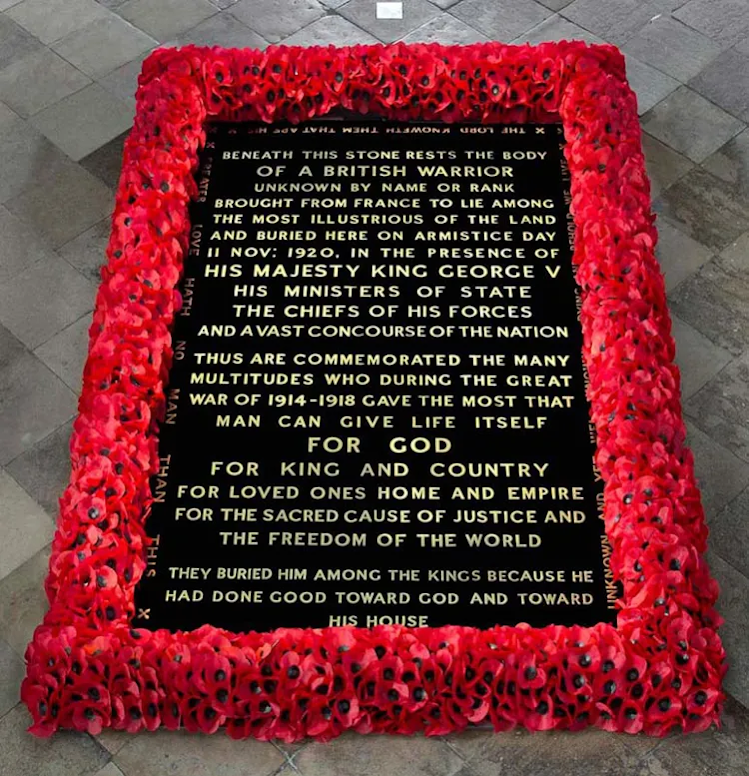
The following excerpt is drawn from my recent book – Ulster’s Lost Counties: Loyalism and Paramilitarism since 1920. It describes Operation Basil, the British Army’s operation to seize the Donegal village of Pettigo and parts of the surrounding Termon Valley, from the Irish Free State on 4 June 1922. Pettigo was eventually handed back to the Free State government on 8 January 1923. The man who commanded Operation Basil, Colonel Louis Wyatt, had been responsible for selecting the body of the Unknown Warrior at Westminster Abbey. In July 1920 Wyatt, as the senior officer in Flanders, Wyatt went to a chuch at St. Pol. Four bodies, from the battlefields of Aisne, the Somme, Arras and Ypres, lay before him. He selected one but had “no idea even of the area from which the body I had selected had come. The body was taken to England by HMS Verdun and six barrels of earth from the Ypres salient were placed in the tomb at Wesminster Abbey so the body should rest in the soil on which so many of our troops gave their lives.”
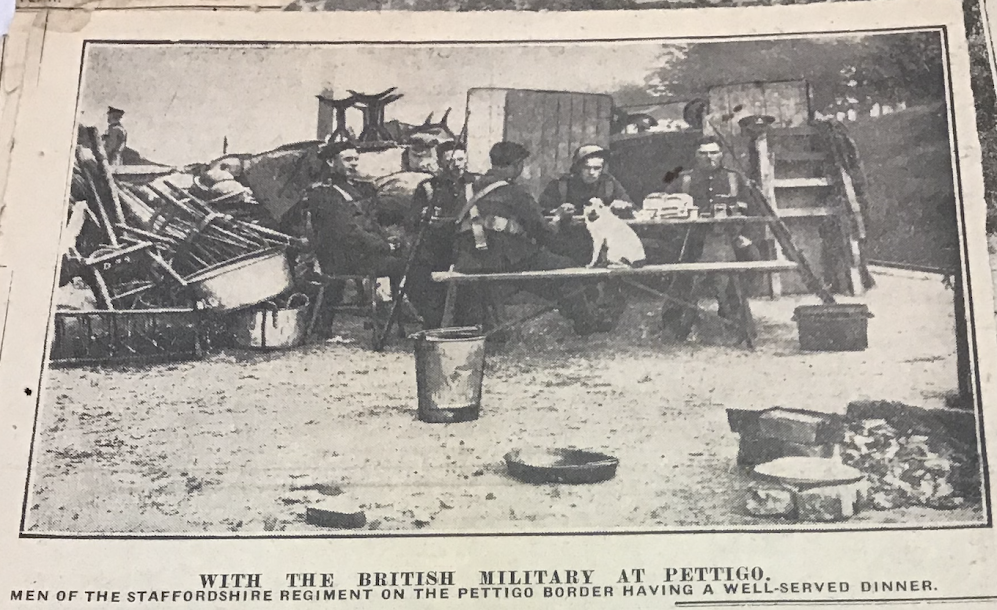
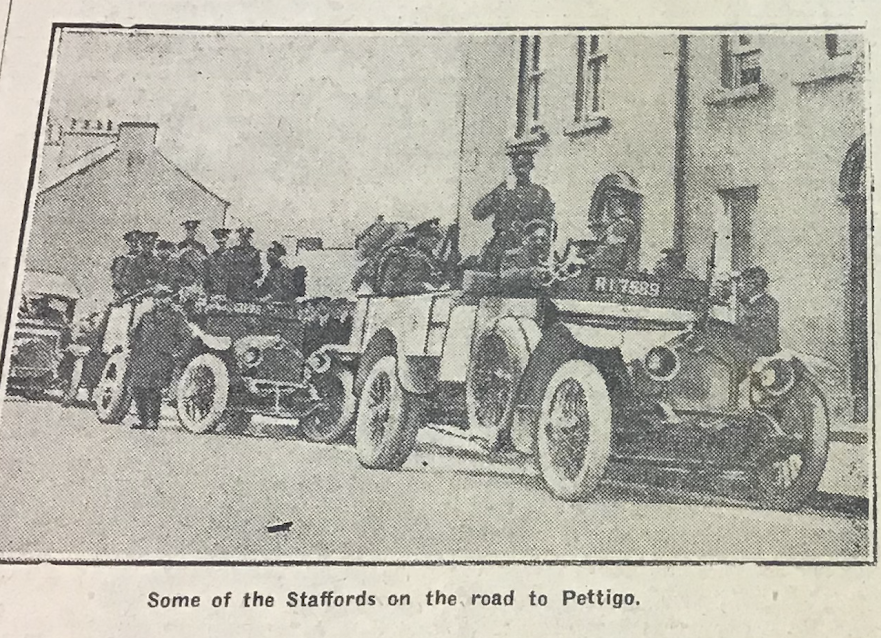
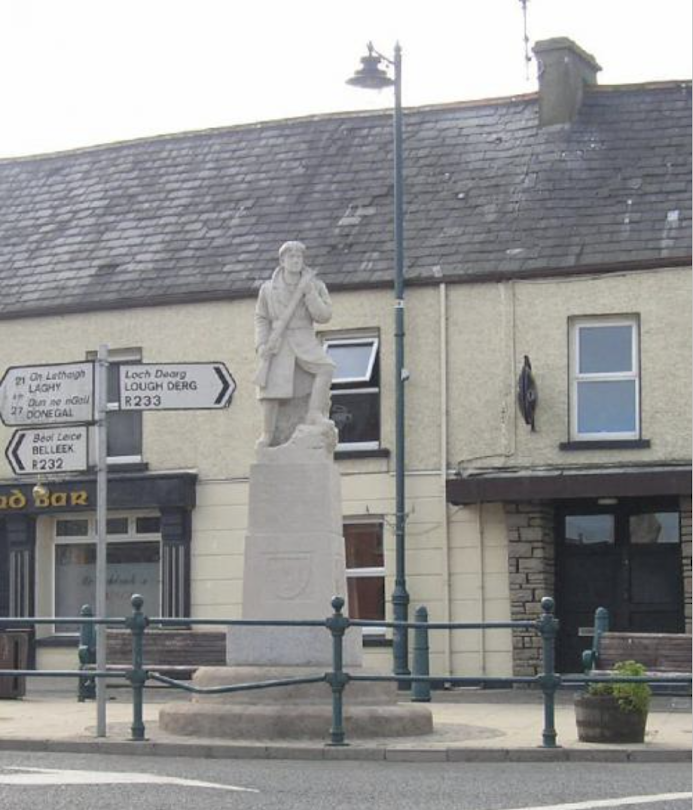
On 18 May the Northern Border Commission – made up of British and National Army liaison officers – visited Pettigo and found the area to be “very quiet”.[1] The next day the joint National Army / anti-treaty IRA Northern Offensive began with a series of raids and ambushes, particularly in the border areas of Fermanagh and Tyrone. Unlike the northern IRA, the National Army failed to mobilise in strength; only a few “regular” soldiers crossed the border – some took up positions in Belleek – possibly due to mounting distrust towards the anti-treaty forces.[2] Lt. Col. Wickham ordered the USC to retake the western side of Lower Lough Erne, also known as the “Belleek triangle”. On 27 May Fermanagh USC county commandant, Basil Brooke, sent a force made up of 64 ‘A’ and ‘B’ Specials, to travel by boat to the western shore of the “triangle”, where they took possession of Magherameena Castle, ejecting Fr. O’Kieran from his home. A nervous USC constable at Magherameena later shot and wounded a local loyalist, presuming that he was an IRA volunteer.[3]
IRA commanders immediately saw that the USC had placed themselves in an extremely exposed position; within the six counties, the “Belleek triangle” could only be accessed from the north and south by passing through territory controlled by the Free State. Overhanging hills and cliffs meant that both land routes (and the castle itself) were also exposed to the threat of IRA snipers. Rather than giving up Belleek, the IRA went on the attack; a USC constable, Wexford-born Thomas Rickerby, was killed in an ambush near Belleek Fort on 28 May when USC commanders attempted to send reinforcements. The IRA seized an abandoned USC Lancia armoured car. Fearing becoming surrounded the USC’s county commandant, Basil Brooke, moved an ‘A’ Specials platoon from the exposed position of Garrison in south-west Fermanagh. The USC was also forced to abandon Magherameena and retreat in small boats to nearby Buck Island. They were evacuated on 29 May by a local vessel, the Pandora, owned and captained by Hazel Laverton.[4]
Encouraged, the next day IRA volunteers engaged a British Army and USC reconnaissance patrol that attempted to approach the northern part of Pettigo village which lay in Northern Ireland. (Sometimes known as Tullyhommon to distinguish it from the southern part.) An armoured car was damaged, and a number of soldiers wounded.[5] Sir James Craig asked his security adviser, General Sir Arthur Solly-Flood if he could restore government control over the western bank of Lower Lough erne. Solly-Flood replied that he could not act “due to the unpreparedness of the constabulary”.[6]
IRA and National Army reinforcements moved into the Pettigo area at the end of May, digging trenches and erecting barriers of railway sleepers around the village.[7] They had also taken over the post office and disconnected the telegraph. (The former postmaster William Read fled Pettigo for the safety of Enniskillen.) After his soldiers seized two rifles “from Specials who reside in [Pettigo] Co. Donegal” at the end of May, Joseph Murray wrote a report at 4 Brigade Headquarters at Ballyshannon warning that a number of loyalists were actively resisting the National Army in the Pettigo area.[8] Murray’s soldiers had also captured a number of UVF weapons held by loyalists in Pettigo, including three rifles and the same number of revolvers.[9] During the following days National Army and IRA officers moved quickly to arrest prominent loyalists who resided on the Donegal side of Pettigo. As well as removing suspected armed opponents, these could be used to deter future USC reprisals against republican families in the north or secure an exchange of prisoners.[10]
Among those loyalists arrested by the IRA was the former head constable of the USC ‘B’ Specials in Pettigo. William Murphy was a chemist and resided on the Donegal side of the border. A military veteran – he had served as an officer in 11 R.Innis.F. in France – Murphy “did not know how he had offended. He belonged to the B force, and was an ex-serviceman but he was well-treated by his captors.”[11] Evidently, like Samuel Woods in Monaghan, Murphy believed that it should be possible to loyally serve in a British or imperial institution like the USC, while continuing to reside as a law-abiding citizen south of the border. The IRA in Pettigo also arrested George Hall, a shepherd on Sir John Leslie’s estate near Pettigo. William and Frank Shaw, both ‘B’ Specials had already moved across the border; however, their brother Robert was taken prisoner as were Johnny Humphreys, Robert Irvine and Thomas Emery. Humphreys and Shaw were freed on 4 June when British forces entered Pettigo. Murphy, Hall, Irvine and Emery, who had all served as members of the USC while residents of Donegal, were held until August, including at Ballyshannon, Drumboe and later Glenties.[12] Thomas Emery recalled that William Murphy had tried to persuade him to attempt to overpower their captors. (Emery declined.)[13]
The Church of Ireland rector of Pettigo, Reverend Edgar McKegney confirmed to Prime Minister Sir James Craig that the four men had served in the USC but claimed that they had “been paid off” by Basil Brooke shortly after the truce and not done any duty since.[14] At least some of the Donegal ‘B’ Specials in the Pettigo area continued to serve in the USC after the truce, contrary to the assertion of Reverend McKegney. James Johnston, a district sub-commandant of the ‘B’ Specials and a resident of Tievemore, recalled that he and other Donegal ‘B’ men were ordered to cross over to Fermanagh for duty in late May.[15]
From 28 May until 4 June, Pettigo’s loyalists claimed that Irish soldiers, IRA volunteers “and their female associates” engaged in a week-long “reign of terror” in the area, including assaults against local loyalists, the burning or destruction of loyal emblems such as flags, pictures of the King, and memorials to relatives killed while serving in the British military.[16] IRA volunteers forced Pettigo’s loyalists to paint over the sign that read “Fear God and Honour the King” which adorned the gable end of Aiken’s hotel in the centre of the village. (It was replaced with “Up De Valera”.) As local loyalists on ladders were repainting the wall, IRA volunteers opened fire on Special Constabulary positions on the northern side of the border, near Pettigo’s Belfast Bank – those doing the painting believed it may have been an attempt to lure the USC into shooting them. Other loyalist residents of the village were made to fill sandbags outside the IRA’s headquarters on Mill Street.[17]
Anti-treaty forces ransacked the mills owned by the Shaw brothers, breaking sluices and stealing valuable equipment.[18] Sammy Hilliard, a local farmer, told his grandson about his own experience: “The IRA was rampant in their pilfering of, damaging and burning of Protestant property. Sammy spent many nights outside, guarding his property from the IRA and sometimes sent his wife and children over the border to his in-laws at Bannachbeg, Kesh.”[19] Colonel William Barton decided to evacuate his children under the care of a nanny to Enniskillen by boat. Barton claimed that as they were being rowed across Lough Erne IRA volunteers on the Donegal side of the border opened fire on the boat. He then organised a group of three local ‘B’ special constables and an on-leave British Army NCO to fight back against the IRA, preventing them from occupying Waterfoot House.[20]
Loyalists’ memories of ill-treatment at the hands of the IRA’s Lettercran Company were particularly bitter. IRA volunteers took over the house of Thomas Jervis, drilling holes in the walls to fire on nearby members of the USC across the border.[21] Martha Crawford, also from Lettercran, recalled her father putting cushions in the windows of their house in a pathetic attempt to stop the bullets.[22] Loyalists who fled across the border were not permitted to return – Denis McGrath, the officer commanding the Lettercran IRA, posted sentries to prevent them returning at night to milk cows or tend to their farms.[23] A Methodist minister blamed the violence of this period as a major factor in why the congregation in Pettigo declined by almost a third between 1921 and 1930.[24] The unionist press in Belfast estimated that up to 25 Protestant families left the Pettigo area in late May and early June. Some went to Enniskillen, where they were accommodated by “Masonic brethren”.[25]
Local loyalists – including Donegal USC constables operating from Fermanagh – hit back. After a local Cumann na mBan member, Susan McMeel detained and searched an old Protestant lady in Lettercran, she was pursued by four members of the USC who crossed the border on 2 June, shooting her and another woman, Bridget McGrath. McMeel, the niece of a Catholic priest who had served in Pettigo, identified the man who shot her and Bridget McGrath as William Johnston who normally resided at Tievemore on the Donegal side of the border.[26] The USC also abducted Lettercran IRA company commander, Denis McGrath from his house. McGrath was taken across the border and held prisoner for several days.[27]
The geography of west Fermanagh meant that it was almost impossible to defeat the IRA and elements of the National Army unless the British Army occupied the hills in Donegal that overlooked Tullyhommon and Belleek and the roads that connected both places to the rest of Fermanagh. Major General Archibald Cameron, the commander of the British Army in Northern Ireland, initially recommended seizing a large part of Donegal – effectively cutting off the county from the rest of the Free State by closing the “Ballyshannon gap”. Instead Prime Minister Lloyd George’s government ordered the Army to launch a scaled down counter-offensive. The aim was to occupy Pettigo, and the hills in the Free State surrounding it and the village and fort of Belleek.[28]
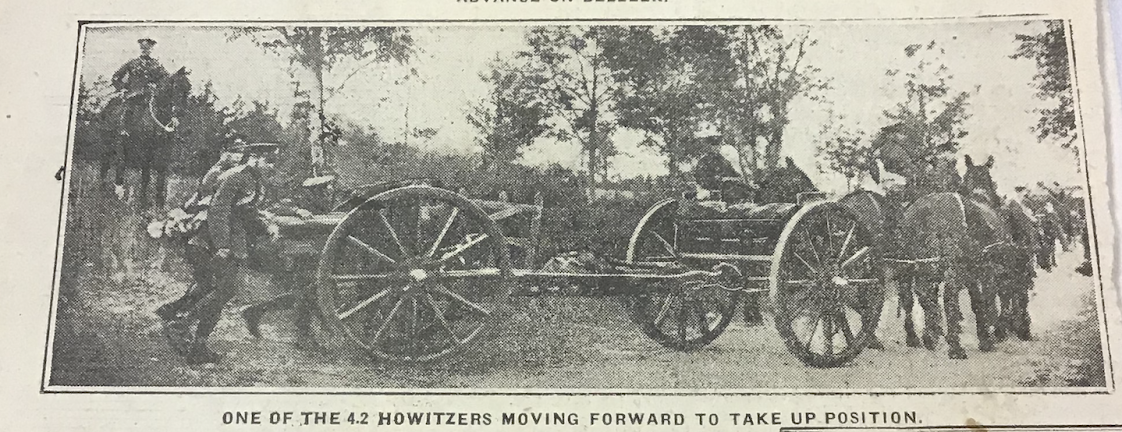
The government of Prime Minister David Lloyd George hurriedly sent reinforcements to Northern Ireland, including four battalions, a howitzer battery and an RAF squadron of aircraft. However, Lloyd-George also acted as a critical restraining influence on Churchill and the British Army, chastising both for initially approaching the military operation as if Belleek was “the Hohenzollern redoubt”. The National Army’s feint north was “a farce”, Lloyd George wrote, exaggerated by Field Marshal Henry Wilson, now a unionist MP, and Eamon de Valera alike “for political reasons”. Lloyd George insisted that the half-hearted northern offensive by General Seán Mac Eoin, who he described as “a friendly blacksmith”, should be dealt with tactfully. Men like Mac Eoin were critical for the suppression of the anti-treatyites and the future of British-Irish relations. Lloyd-George instructed the army to minimise casualties and not to seize any more territory than was absolutely necessary to secure Northern Ireland.[29]
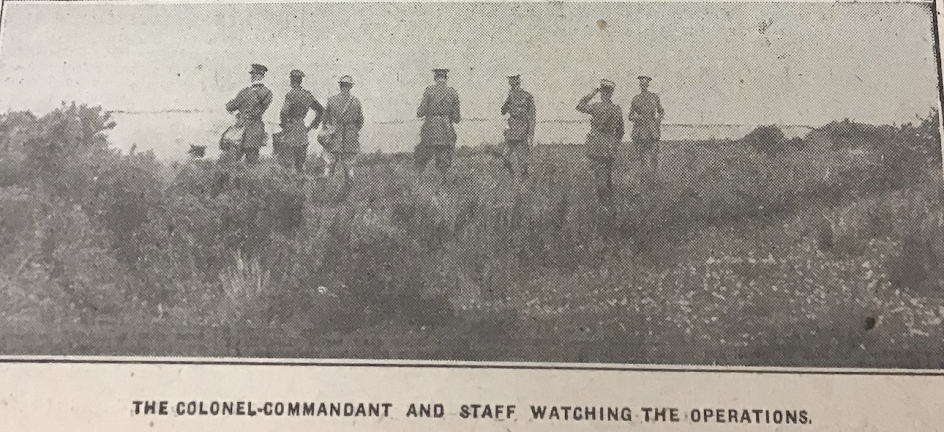
The operation to take Pettigo – named “Basil” – was overseen by Colonel Louis Wyatt, commander of the British Army’s 18th Infantry Brigade. Operation Basil was an entirely military affair, aside from some borrowed USC lorries and drivers. On Sunday morning, 4 June, two companies each from 1 Bn., Lincolnshire Regiment and 2 Bn., South Staffordshire Regiment (2 South Staffs.) supported by a section of howitzers, moved quickly to occupy Pettigo and the surrounding area. The Lincolns had crossed over from Portinode to the west bank of Lough Erne via Boa Island the day before, carrying their boats overland from one shore to the other. They then moved under occasional sniper fire to Waterfoot near Pettigo.[30] Wyatt split his forces into three parties – two to flank around and seize the hills on either side of the village and one to enter via the main road. Near Clonelly, as the centre group approached the village, a USC driver, 20-year-old Thomas Dobson, was shot dead by IRA gunfire from Drumharriff hill on the Donegal side of the border. Dobson was originally from a strongly loyalist townland near Killegar in County Leitrim. (Killegar, unusually for a Connacht county, had its own UVF district.)[31]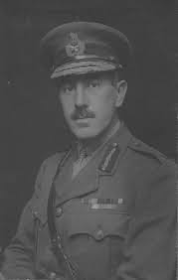
Pettigo was defended by a force of 86 men; 55 of these were “pro-treaty” (largely but not exclusively National Army soldiers drawn from 1st Northern Division) and the rest anti-treaty IRA volunteers. Many of these were attending mass at the Catholic church when the British offensive began on the late morning of 4 June.[32] At 1320 Colonel Wyatt ordered four howitzer rounds to be fired on an IRA dug in on Drumharriff hill overlooking Pettigo and the approaching road to Tullyhommon. An account by an officer of the 5th Armoured Car Company, Royal Tank Corps, gives a dry but insightful military description of the engagement at Pettigo from the British perspective. Five armoured cars advanced to Pettigo during the later morning of 4 June. Colonel Wyatt arranged flanking parties to take the hills to the south-west and north-east of Pettigo. An IRA Lewis gun opened up on the approaching soldiers on Drumharriff hill behind Pettigo. The Tank Corps report stated that,
Enemy Lewis gun opened fire from steep hill 75 yards north of station (this gun crew were all killed, British Lewis gun catching them in the rear and a bayonet party from the west). R3 [car] engaged retreating enemy up the hillside, a splendid oblique traverse – what this gun did not accomplish a 4.5 shell did on the crest – range 300 yards. Cars entered village, engaged “manned houses” and reconnoitred every road – dislodged enemy posts etc. All cars assembled in village – infantry took possession. R1 [car] under Sgt Hillier reconnoitring reached the crest [of the hill] just as the last 4.5 shell dropped – car got quite a lot of debris – he wisely turned and re-entered the village.[33]
An armoured car moving out from Mill Street accepted the surrender of seven “thoroughly demoralised” IRA volunteers; after disarming them the soldiers in the car ordered the men to “remain still”. Four and half hours later the armoured car crew returned to escort them across the border into captivity. The men had been “too terror stricken to move although they were in Free State territory and could easily have gone away “home”.”[34] The IRA suffered three fatalities during the assault or in the immediate aftermath – two, Bernard McKenna and William Kearney, were volunteers from Drumquin, a village a few miles over the border in Tyrone. The Tyrone volunteers were killed by gunshot wounds to the head. Flood was a local Pettigo volunteer attached to the medical section of his battalion and the nephew of a local Sinn Féin supporter and businessman, D.J. Flood. His death certificate mentions that he was “shot” but also that “no medical attendant” was present to verify cause of death. The official that signed Kearney and McKenna’s death certificates in Enniskillen was Pettigo’s former postmaster and magistrate, William Read. It was a revenge of a sort.[35]
Two more artillery rounds were fired at National Army/IRA positions in Pettigo village itself. At approximately 1340 Col. Wyatt ordered a ceasefire and walked up the Mill Street bridge in Pettigo accompanied by an armoured car. There he spoke to 1st Lieutenant Hugh Martin, a National Army officer from Derry. Wyatt informed Martin that he and his men had up to 1400 in which to evacuate Pettigo. Captain Michael O’Farrell, a 25-year-old National Army medical officer in command of the garrison at Pettigo claimed that he agreed to this but that he and some of his men were fired on and taken prisoner before the time elapsed.[36] By the British account O’Farrell approached Wyatt at 1355 and asked for more time and if he could take his transport with him. Both requests were refused. (General Cameron reported that the “transport” Farrell proposed to take with him was the recently captured USC Lancia car.) Firing then broke out in the village; Wyatt promptly made O’Farrell a prisoner. The rest of Pettigo garrison had already left the village or were in the process of doing so. The British, for their part, were pleased with how Operation Basil transpired. The troops has shown “great skill and forbearance”, inflicting little loss of life. Fifteen prisoners were taken in total, including two officers, a Lancia car seized on 28 May and a Lewis gun were also recovered. The Lancia car was part of Constable Dobson’s funeral cortege at Monea, emblazoned with the graffiti, “The Holy Terror” and “Found in Pettigo.”[37]
In the hours before the arrival of the South Staffs, loyalists in Pettigo were confronted by angry Irish soldiers and IRA volunteers who believed that a fifth column in the area was passing on intelligence to the approaching British forces. The rector of Pettigo, Reverend Edgar McKegney, and local shopkeeper Johnny Humphreys were both “put up against the wall” near the Anglican church. McKegney pleaded with them to allow him to celebrate his morning service. He also asked that a local Protestant boy that had been taken hostage, 15-year-old David Johnston from Sessiaghkeelta (a brother of a Donegal ‘B’ Special), be allowed to attend the mid-morning service. This request was eventually granted by Captain O’Farrell; McKegney recalled that the boy was brought to the church and that his armed guard remained with him throughout. During the service these guards tore down some banners in the church.[38]
Shortly afterwards, the British offensive began. McKegney wrote how, “our sorrow was turned to joy in the afternoon when the soldiers arrived. I saw the last of the irregulars making westward, but not fast enough to outdistance terror-stricken women and children who were not, of course, fired upon.” McKegney then asked his church sexton to ring the church bells in celebration, “‘Ring like the devil’, I said. ‘I will be God’, said he, and he did.”[39] From a hill on the Fermanagh side, James Johnston watched soldiers, IRA volunteers and the village’s Catholic inhabitants “fleeing for dear life out of the town up the hillside on the Donegal side – just like a swarm of bees.”[40]
An internal Free State report on the “Battle of Pettigo” claimed that “… five or six young men, residents in the town, were seen armed with rifles and ammunition fighting on the side of the British.”[41] Some Catholic residents complained that they were compelled to leave their homes, victims of harassment and violence at the hands of Pettigo’s euphoric loyalists.[42] The Catholic Bishop of Clogher, Patrick McKenna, believed that D.J. Flood’s business was especially targeted because of “trade jealousy”. (This overlooked the fact that Flood’s nephew was one of those IRA volunteers killed.)[43]
Shortly after the operation Col. Wyatt handed over command to Lieutenant Colonel Richard Wilson of 1 Lincolns.[44] By the late afternoon Captain Archibald F. Hordern, D Coy, 2 South Staffs., and the new Officer Commanding Pettigo was in the main square of Pettigo speaking to local loyalists. Basil Brooke, the commandant of the USC in Fermanagh, arrived shortly afterwards together with his wife. Celebrations continued into the evening. Hotel owner Hezlett Aiken returned to the village “with a Union Jack wrapped over his waistcoat.” Meanwhile, local children picked up discarded National Army hats, and, after binding them with red, white and blue ribbons, wore them around the village.[45] The wall of Aiken’s Hotel was repainted with the familiar slogan, and an addition: “Fear God, Honour the King, Remember 4th June.”[46] A former IRA position on a nearby hill was renamed “Stafford Post”.[47]
Joseph Murray recalled that he moved from Ballyshannon with reinforcements towards Pettigo to cover the retreat of the garrison and soldiers. But Murray was a pragmatist. On approaching Pettigo he met Pettigo IRA battalion commander Danny Gallagher. Realising the scale of the British offensive Murray quickly decided not to contest the “invasion” any further: “Joe Sweeney [commander 1 Division, National Army] and I decided that our men would be massacred. We decided to withdraw them [from Belleek]. We knew that if we provoked the British, they would take Ballyshannon.” Only IRA volunteers remained in the village of Belleek when British soldiers entered the village on 8 June, quickly seizing it and the overlooking fort (in County Donegal) without any fatalities on either side. Murray’s intuition was correct. Since General Cameron’s original plan had been to take Ballyshannon, more intense National Army resistance may have led to the closing of the “gap” by the British Army.[48] At a local level the leader of the IRA’s Lettercran Company, Denis McGrath, also took steps to try to repair relations with his ‘B’ Specials neighbours. He met his Donegal neighbour, the sub-commandant of the local USC ‘B’ Class constabulary, James Johnston, on 11 June. Friendly assurances were exchanged but no agreement was signed – as suggested by the USC – since the local IRA could not guarantee the good conduct of “outsiders” in the area.[49]
Michael Collins protested that the National Army had been the victims of unprovoked aggression by the Special Constabulary. He forwarded a report to Winston Churchill written by the National Army’s Colonel Commandant Dan Hogan which (falsely) claimed that there were no “irregulars” in the vicinity of Pettigo in the days before Operation Basil.[50] Despite these protests the provisional government in Dublin quickly acceded to an agreement with the British and Northern Irish governments that established a neutral zone outside the village of Pettigo, where no person was to be “officially armed” except soldiers of the British Army. The Secretary of the State for the Colonies, Sir Winston Churchill, presented the establishment of this British zone in the border region as a form of military peace enforcement, similar to that in Silesia, between “the two hostile and mutually explosive forces of the Irish Republican Army and the Ulster Special Police.” However, Churchill also confirmed that the military would recruit “an unarmed police of a local character” in Pettigo.[51] A garrison of approximately 200 soldiers, headquartered in Flood’s Hotel under the command of Captain Hordern, was established in Pettigo. The soldiers were mostly drawn from ‘D’ Company, 2nd Battalion, South Staffs. together with a detachment from the Machine Gun Corps and a 4.5-inch howitzer gun; the soldiers were billeted in various locations in the Pettigo area, including in Sir John Leslie’s house and Flood’s Hotel.[52]
Foot Notes
[1] The Border liaison commission was established on 15 February 1922. An initiative of the Secretary of State for the Colonies, Sir Winston Churchill, the British Army complained of a failure of the National Army to attend meetings and of the predictable antipathy that existed between Free State offices and those of the USC – also represented on the commission. The British also claimed that the IRA stole vehicles belonging to their liaison officers. TNA: CAB 21/254: Northern Ireland: invasion of, Republican: Memorandum from Major General Cameron, Command. Ulster District, to General Headquarters Ireland, 6 June 1922; Nevil Macready, Annals of an Interesting Life, Volume 2 (London: Hutchinson, 1924), 622.
[2] PRONI: T/2616/3: Livingstone Papers: Joseph Murray, 16 June 1967.
[3] DCA: JMC: P/183/4/1/9: Report from Adjutant Joseph Murray (on behalf of Officer Commanding), 4 Brigade, 1 Northern Division, IRA, 2 June 1922; TNA: CAB 21/254: Northern Ireland: invasion of, Republican: Memorandum from Major General Cameron, Command. Ulster District, to General Headquarters Ireland, 6 June 1922.
[4] Mervyn Dane, The Fermanagh ‘B’ Specials (Enniskillen: W. Trimble, 1970), 9; Census Entry for Albert Rickerby, Dunraven Avenue, County Down, www.census.nationalarchives.ie/pages/1911/Down/Pottinger__part_of_/Dunraven_Avenue/228094/ [accessed 22 April 2021].
[5] DCA: JMC: P/183/4/1/9: Report from Adjutant Joseph Murray, 2 June 1922.
[6] TNA: CAB 21/254: Northern Ireland: invasion of, Republican: Copy of a Telegram from General Solly Flood to Sir James Craig, 30 May 1922.
[7] John Cunningham, Pettigo and Its People (Enniskillen: Erne Heritage, 2002), 66.
[8] Donegal County Archives: P/183/4/1/8: Report from Adjutant Joseph Murray, 1 June 1922.
[9] DCA: JMC: P/183/4/1/5 (4): Report from Adjutant Joseph Murray, 31 May 1922.
[10] Donegal County Archives: P/183/4/1/5 (5): Report from Adjutant Joseph Murray, 26 May 1922.
[11] ‘Malicious Injuries in Donegal’, Londonderry Sentinel, 26 February 1924.
[12] TNA: CO 762/163: Robert and William Shaw; ‘Kidnapped Police’, Belfast Newsletter, 10 June 1922; ‘Why Are They Not Released?’, Londonderry Sentinel, 8 August 1922.
[13] TNA: CO 762/12: IGC: Thomas Emery.
[14] Letter from Reverend Edgar McKegney to Prime Minister Sir James Craig, 8 June 1922 (copy in the author’s possession).
[15] Some Early Memories of the Johnston/Bell Families and Tievemore [unknown date, pamphlet in the possession of the author], 13.
[16] Edgar McKegney Papers: Letter from Reverend Edgar McKegney to Prime Minister Sir James Craig, 8 June 1922.
[17] Churchill Papers, Cambridge [hereafter CHAR]: 22/13: Report by W.B. Spender to Prime Minister Sir James Craig, 8 June 1922; Downing, Neighbours in Pettigo, 87; Cunningham, Pettigo and Its People, 66.
[18] TNA: CO 762/163: Robert and William Shaw.
[19] Downing, Neighbours in Pettigo, 93; 18 3.
[20] CHAR: 22/13: Report from County Commandant, USC Fermanagh to GOC Ulster District, 9 June 1922.
[21] Some Early Memories of the Johnston/Bell Families and Tievemore, 14.
[22] McElderry, Methodism in the Pettigo Area, 39.
[23] Downing, Neighbours in Pettigo, 96.
[24] McElderry, Methodism in the Pettigo Area, 42.
[25] ‘Free Staters at Pettigo’, Belfast Newsletter, 14 December 1922.
[26] William Johnston subsequently moved across the border but kept the farm at Tievemore. ‘Border Service Case’, General Advertiser, 2 June 1923.
[27] NAI: TSCH/3/S1325: Report by Commandant Dan Hogan, June 1922.
[28] The Parliamentary Archives [hereafter TPA]: LG/F/185/1/4: Memorandum: ‘British Operations for Clearing the Pettigo-Belleek Triangle’, 6 June 1922.
[29] CHAR: 22/13: Message for Winston Churchill from David Lloyd-George dictated over the telephone, 8 June 1922.
[30] TNA: CAB 21/254: Northern Ireland: invasion of, Republican: Plan for Operation Basil, signed by Lt. Col. C.F. Watson, General Staff, Ulster District, 3 June 1922; TPA: LG/F/185/1/4: Memorandum: ‘British Operations for Clearing the Pettigo-Belleek Triangle’, Lionel Curtis, Colonial Office, 6 June 1922; ‘Louis John Wyatt’, www.ssafa.org.uk/cumbria-1/cumbria/latest-news-1/louis-john-wyatt [accessed 27 November 2021].
[31] ‘Moving on Belleek’, Belfast Newsletter, 8 June 1922; NAI: Census entry for Thomas Dobson, Drumshinin Glebe, Carrigallen, County Leitrim. www.census.nationalarchives.ie/reels/nai002706998/ [accessed 29 September 2020] and Quincey Dougan, ‘The Cavan Volunteer Force’, 3 July 2015, http://quincey.info/?p=1117 [accessed 28 September 2020].
[32] TNA: WO 32/9527: Provisional Government Of Ireland Committee – Operations in the Pettigoe Area: Report by Colonel-Commandant Dan Hogan, 7 June 1922.
[33] The Tank Museum, History of 5th Armoured Car Company, 1920-1922: Report on Pettigo and Belleek, June 1922, available at www.theogilbymuster.com/record/62874 [accessed 23 Mary 2022].
[34] Ibid.
[35] Captain Alfred Finlinson of 2 South Staffs recalled that, “In the advance on Pettigo, D Company contacted a Thompson gun crew of 3 who refused to surrender and were killed. Their bodies were claimed the next day by the local priest.” Staffordshire Regiment Museum [hereafter SRM]: SSR/7740/12: Questionnaire re: Ireland answered by (ex-Captain) Alfred Finlinson. Lieutenant Colonel Michael Savage claimed that the IRA volunteers were “bayoneted by our men” but that description does not match the coroners’ reports. William Deazley, a National Army private soldier and former IRA 2 Battalion, 2 Brigade, 1 Division, signals officer, from Dromore, County Tyrone, is also included in the Pettigo Memorial. He was mortally wounded after he was accidentally shot coming off police duty in the nearby town of Ballyshannon on 5 June 1922. SRM: SSR/7740/12: Questionnaire re: Ireland answered by (ex-Captain) Alfred Finlinson; SRM: SSR/7740/12: Lt. Col. M.B. Savage, Looking Back (unpublished manuscript). 128; MAI: MSPC: W2D221: Patrick Flood; MSPC: W2_11378 William Kearney; MPSC: MD27670: William Deazley; MA/MSPC/RO/386: Roll for 2nd Battalion, 2nd Brigade, 2nd Northern Division.
[36] TNA: WO 32/9527: Provisional Government Of Ireland Committee – Operations in the Pettigoe Area: Report by Colonel-Commandant Dan Hogan, 7 June 1922: Witness Statement by Lieutenant Hugh Martin.
[37] TNA: CAB 21/254: Northern Ireland: invasion of, Republican: Memorandum from Major General Cameron, Command. Ulster District, to General Headquarters Ireland, 6 June 1922; ‘Moving on Belleek’, Belfast Newsletter, 8 June 1922.
[38] ‘Irish “War”, Shields Daily News, 8 June 1922; Kidnapped at Pettigo’, Weekly Telegraph, 17 June 1922; A Peaceful Spot’, Northern Whig, 10 June 1922; Edgar McKegney Papers: Letter from Reverend Edgar McKegney to Prime Minister Sir James Craig, 8 June 1922.
[39] Ibid.
[40] Some Early Memories of the Johnston/Bell Families and Tievemore, 15.
[41] UCDA: Ernest Blythe Papers: P24/220: A Report by Captain McNaghten on the Situation in Pettigo, 9 April 1923.
[42] NAI: TSCH/3/S1235: Gearailt McGann, Private Secretary to the Chairman of the Provisional Government, Telegram to Chairman Michael Collins, 13 June 1922.
[43] NAI: TSCH/3/S1235: Letter from Bishop Dr Patrick McKenna, Catholic Bishop of Clogher to General Nevil Macready, Commander, British Forces in Ireland, 12 August 1922; Brian Barton, Brookeborough: The Making of a Prime Minister (Belfast, QUB Institute for Irish Studies, 1988), 50.
[44] TNA: CAB 21/254: Northern Ireland: invasion of, Republican: Operation Report from Brigadier Londonderry to GHQ Ireland, 4 June 1922.
[45] ‘The Pettigo Loyalists’, Belfast Newsletter, 7 June 1922.
[46] Another reported version was: “Thee God we praise – June 4th 1922 – Fear God and Honour the King”. Cunningham, Pettigo and Its People, 66.
[47] TNA: WO 32/9579`: Report on Pettigo, S.G. Tallents, 13 November 1922.
[48] PRONI: T/2616/3: Livingstone Papers: Joseph Murray, 16 June 1967.
[49] Some Early Memories of the Johnston/Bell Families and Tievemore, 18.
[50] CHAR: 23/13: Report by Commandant Colonel Dan Hogan to General Headquarters, 7 June 1922.
[51] Winston Churchill, Secretary of State for the Colonies, Hansard, 25 June 1922, https://hansard.parliament.uk/Commons/1922-06-26/debates/43517075-6711-4e54-86a1-6904644762a2/Ireland [accessed 28 September 2020].
[52] The Pettigo garrison was reduced to 137 troops in September 1922. Hordern also had a distinguished record in the Royal Flying Corps and Royal Air Force. He later returned to policing, serving as Chief Constable of Lancashire Police, including during “the Blitz” when he was decorated for bravery. ‘Former E.R. Chief Constable Dies’, Hull Daily Mail, 18 April 1950; SRM: SSR/7740/12: Questionnaire re: Ireland answered by (ex-Captain) R W H Cooper.
About Edward